Public Lecture

Foundation for Ethical Society and Cultural Awareness Hosts First Public Lecture on Culture Change and Nation Building

The Foundation for Ethical Society and Cultural Awareness (FESCA) is set to host its inaugural public lecture focusing on culture change, ethical transformation, and sustainable national development.

Scheduled to take place on Thursday, October 1, 2026, starting at 1:00 PM Nigerian time, the event will be held virtually via a Zoom conference. The lecture centers on the theme “The Role of Ethics, Integrity, and Cultural Change in Nation Building.

According to the organizers, the discussion aims to address why national transformation requires a fundamental shift in values, attitudes, behaviors, and ethical standards. FESCA highlights that sustainable development relies heavily on cultural change and responsible citizenship to build a more accountable and prosperous nation.

The virtual event features a lineup of speakers, panel discussants, and a moderator:

  • Speaker: Mr. Nosa Ota Osaikhuiwu, PMP, SAMC, LSSGB
  • Panel Discussants:
    • Malam Naseer Kura (Former President, National Association of Nigerian Students)
    • Rev. David Mugadzi (BTH, MARS, MSc GOL, MTS, Canada)
    • Prof. D. R. Mpunwa (University of Namibia, Republic of Namibia)
    • Comrade Frederick Odorige (Global Coordinator, Global Coalition for Security and Democracy in Nigeria)
  • Moderator: Dr. Charles Omorodion (Accountant, Chartered Marketer, and Leadership Management, London, United Kingdom)
  • General Secretary / Organizer: Prince Ewemade Konkons

The public lecture is open to all Nigerians and stakeholders committed to ethical leadership, good governance, and national development. This includes civil society organizations, community leaders, traditional and religious leaders, academics, researchers, students, young professionals, government officials, business leaders, and development partners.

Interested participants can join the meeting via the Zoom link – https://us05web.zoom.us/launch/jc/85037004319

#image_title

Empower Nigerians to Defend Themselves

Sir: There is no denying that violence has become an unfortunate part of everyday life for many Nigerians. Across the country, kidnapping, banditry, terrorism, armed robbery, and violent crime have created an atmosphere of fear and uncertainty. For many citizens, the question is no longer whether they will encounter insecurity, but when. Thus, something concrete must be done to address this, because a “desperate disease requires a desperate cure”.

While successive governments have invested heavily in military hardware, increasing the size of the army and security operations, insecurity continues to threaten communities across Nigeria. The men and women of the Armed Forces, the Police, the Department of State Services, the Nigeria Security and Civil Defence Corps, and other security agencies deserve recognition for their courage under fire and sacrifice. They face an enormous challenge in protecting a nation of more than 200 million people against increasingly sophisticated criminal and terrorist networks.

Yet courage alone cannot compensate for a lack of timely intelligence or the sheer scale of the security challenge. The society and nation have to fully realize that this is an existential threat, and thus end the terrorist repentance and reintegration policy that continues to expose our security services to moles within their ranks planted by Boko Haram, bandits, and other criminal entities. The army cannot be fighting the insurgents and have the enemy within their ranks collecting first-hand information on troops’ movements and action plans for onward transmission to their terrorists brethren’s.

Every kidnapper, terrorist, or bandit operates within or around communities. They rely on local collaborators for food, fuel, transportation, financing, communication, and intelligence. No insurgency survives for long without some degree of support or tolerance from its surrounding communities.

Government should therefore establish a One Million-Man Community Intelligence Corps composed of responsible citizens drawn from every ward in Nigeria. These individuals would not function as combat troops but as trained community intelligence partners responsible for reporting suspicious activities through secure channels.

Information gathered at the grassroots should flow through local government and state intelligence coordinators into the National Counter Terrorism Centre under the Office of the National Security Adviser. Modern counterinsurgency is won through intelligence before it is won through firepower.

Security is everyone’s business. Government must also win the confidence of the communities where insurgents operate. Citizens are far more likely to cooperate with security agencies when they trust those institutions and believe that their information will be acted upon professionally and confidentially. Community participation remains one of the most effective tools against terrorism and organized crime.

Nigeria should also strengthen the legal framework for combating terrorism, kidnapping, and organized violent crime. Specialized courts or tribunals with appropriate legal safeguards could help ensure that terrorism and kidnapping cases are heard efficiently while fully respecting constitutional rights, due process, and the rule of law. Equally important, those who knowingly finance, transport, shelter, supply, or otherwise materially assist terrorist or kidnapping organizations should face severe criminal penalties. Violent criminal organizations cannot survive without networks of logistical and financial support. Breaking those support networks is essential to defeating insecurity.

Critics often argue that expanding civilian access to firearms could increase violence or accidental deaths. Those concerns deserve careful consideration. At the same time, supporters of reform argue that today’s reality is already deeply troubling. Criminal organizations routinely possess illegal firearms regardless of existing laws, while many law-abiding citizens remain entirely dependent upon security agencies that cannot always respond in time. This imbalance has contributed to growing public frustration and renewed debate over lawful self-defence.

The time has come for bold, practical, and carefully considered reforms that place the safety and security of every Nigerian at the centre of national policy. In line with this summation, I call for the immediate passage of gun rights legislation by the National Assembly to give our people the right to defend themselves against criminals and bandits who make life unlivable for them and their families in their homes and communities. Gun rights today, gun rights tomorrow, and gun rights forever.

Nosa Osaikhuiwu, Houston, Texas, USA.

One million man intelligence agents: A bottom-up approach for securing Nigeria

One Million Man Intelligence Agents: A Bottom-up Approach For Securing Nigeria

There is no denying the fact that insecurity has become one of Nigeria’s most urgent and existential challenges. No nation can develop without guaranteeing the safety of lives and property, and Nigeria is no exception. Addressing insecurity, particularly kidnapping, terrorism, violent crime, and widespread lawlessness, requires not only government action but the active engagement and commitment of the Nigerian people.

In recent years, many have advocated for the creation of state police as a solution to Nigeria’s security crisis. As far back as 2023, I publicly opposed this idea in an article titled “State Police: A Solution in Search of a Problem.” In that piece, I acknowledged the perceived benefits of state police but argued that the dangers far outweigh any potential advantages under Nigeria’s current political and cultural conditions.

Nigeria is not yet politically mature enough to deploy state police without grave consequences. Given our history, state police would almost certainly be abused by state governments as instruments of political persecution. Rival political factions, traditional power blocs, and criminal networks would compete for influence and control, leading to a dangerous fragmentation of authority and a near-total breakdown of law and order. Until Nigeria undergoes deeper political and ethical reform, state police would likely worsen insecurity rather than resolve it.

The Real Problem: Intelligence Failure, Not Manpower

Nigeria’s core security challenge is not the absence of armed personnel but the lack of reliable, timely, and actionable intelligence. Security agencies often respond after crimes have occurred rather than preventing them. Yet insecurity thrives only where information fails. What Nigeria needs is not more guns and military hardware, but a robust, nationwide, bottom-up intelligence architecture, what I describe as a Network of Integrated Intelligence Agents.

This model proposes the deployment of one-million-man civilian intelligence agents across Nigeria, operating from the ward level to local governments, states, and ultimately integrated into a National Intelligence Coordination and Counterterrorism Center in Abuja. Every ward would have an intelligence hub, feeding real-time information upward through secure technological platforms.

These agents would not be recruited based on academic qualifications alone. On the contrary, the network must deliberately include street vendors, farmers, market women, transport workers, artisans, youths, and community leaders, ordinary Nigerians who already know what is happening in their neighborhoods. They would serve as the eyes and ears of the state. Furthermore, such a robust effort on a national scale will, in addition to helping eliminate the insurgency and insecurity,  also boost job creation, reduce poverty, and help reduce the number of persons vulnerable to being recruited by the insurgents and bandits.

Using simple technology, smartphones, encrypted reporting platforms, and centralized data analysis, all information would be transmitted in real time, verified, analyzed, and converted into actionable intelligence. In truth, if Nigeria had reliable intelligence, it would not need to recruit massive numbers of additional police officers or go the route of creating a state police force. Security is everyone’s business; thus, it is time the government engages the public more and seeks their support in this fight for the soul of the nation.

Redefining “Stakeholders” in National Security

In Nigeria, the term stakeholders is often misused to refer only to elites, wealthy individuals, or politically connected persons or groups. This is a dangerous misunderstanding. A stakeholder, by definition, is any individual or group with an interest in the success or failure of a project, enterprise, or venture. By this definition, every Nigerian, at home or in the diaspora, is a stakeholder in Project Nigeria. Security cannot be outsourced solely to government agencies. If you see something, you must say something. Silence enables criminality.

The Deeper Crisis: Culture and Ethics
However, insecurity in Nigeria cannot be discussed honestly without confronting the deeper issue: a cultural and ethical crisis. Across insecurity, corruption, unemployment, and governance failures, the same root causes recur:

  1. Unethical behavior
  2. Greed
  3. Lack of integrity
  4. Pervasive permissiveness and impunity

These four factors define Nigeria’s national dysfunction. Criminals are arrested only to be released through influence, bribery, or political interference. Convicted kidnappers and terrorists escape punishment. High-profile political actors accused of massive looting walk freely, celebrated by supporters who benefit from their crimes. A society that glorifies wealth without questioning its source cannot expect security. A nation that prioritizes forgiveness over justice, emotion over accountability, and connections over consequences will remain unsafe and insecure.

Justice, Accountability, and Hard Choices

Nigeria must make a clear decision: does it want a lawful, ethical society, or does it want to continue on its current path? True security requires difficult but necessary reforms, including:

  • Special tribunals for kidnapping, terrorism, and economic sabotage, modeled after military tribunals.
  • Swift trials with limited technical delays.
  • Severe penalties for convicted offenders and those who provide material support to criminals.
  • An end to selective justice and political immunity.
  • Stand up a one-million-man intelligence agents across the nation.
  • A comprehensive biometric identity database system to prevent identity manipulation.
  • Responsible firearm ownership laws to enable lawful community self-defense.
  • Enable an additional one-million-strong people’s militia with military embeds to defend local communities and take the fight to the insurgents.
  • Redirect funds from the purchases of major military hardware to fund the human intelligence infrastructure network.

Most importantly, Nigerians must accept personal responsibility. If your child, spouse, or relative is engaged in criminal activity, it is your duty to report them. A society that protects criminals because of blood ties is complicit in its own destruction.

Nigeria does not need state police. What it needs is a nationwide, integrated intelligence network powered by ordinary citizens, supported by technology, enforced by ethical leadership, and sustained by a culture that values integrity over impunity. Insecurity will not end through force alone. It will end only when Nigerians collectively reject corruption, criminality, and moral compromise and commit themselves to justice, accountability, and national responsibility.

Security is not the job of government alone. It is the responsibility of us all.

Osaikhuiwu writes from Houston, Texas.

Culture Change

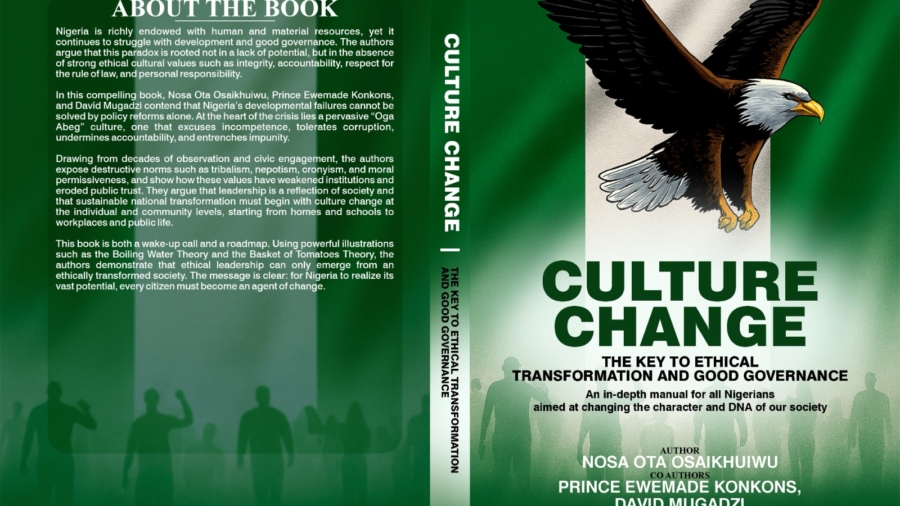
FESCA to Launch ‘Culture Change’ Book on Ethical Transformation, Good Governance in Nigeria

The Foundation for Ethical Society & Cultural Awareness (FESCA), a non-religious, non-political, and non-profit organization committed to promoting ethical values and cultural awareness, is proud to announce the upcoming release of its first publication titled:

“Culture Change: The Key to Ethical Transformation and Good Governance”

Scheduled for release on May 15, 2027, this landmark book provides a critical examination of the Nigerian question—why Nigeria continues to face persistent challenges despite its vast potential. It explores the roles of citizens, societal values, and political structures in shaping national outcomes, while offering practical, people-driven solutions for sustainable progress.

The publication presents a compelling case for cultural reorientation as the foundation for ethical leadership, good governance, and national development. It is designed to serve as a guide for policymakers, educators, civil society actors, and citizens committed to building a stronger and more accountable nation.

This book marks the first in a series of strategic publications by FESCA aimed at addressing key national issues. The Foundation is already advancing work on a second title:

“Boko Haram: New Strategies for Ending the Insurgency and Securing Nigeria”, which will be released subsequently.

Boko Haram

In addition to its publishing efforts, FESCA is collaborating with film producers on a series of movies and documentaries focused on Nigeria’s ethical challenges and pathways to reform. Details of these productions will be announced in due course.

The book will be available for purchase on major online platforms, including Amazon, as well as selected bookstore websites. Copies will also be distributed to key government institutions and selected media organizations.

FESCA calls on Nigerians at home and abroad, as well as all stakeholders invested in the nation’s future, to support this initiative. Individuals, institutions, and organizations are encouraged to procure copies for universities, secondary schools, and public libraries across the country.

book release

PRESS RELEASE: Foundation for Ethical Society & Cultural Awareness (FESCA) Announces National Initiative for Ethical Transformation and Cultural Renewal

Abuja, Nigeria — The Foundation for Ethical Society & Cultural Awareness (FESCA) has formally been introduced to the Nigerian public as a new non-profit organization dedicated to promoting ethical transformation and cultural renewal across the country.

FESCA is a non-political, non-partisan, non-sectarian, non-tribal, and non-religious organization committed to advancing integrity, civic responsibility, and strong ethical values in Nigerian society.

The foundation is built on the conviction that many of Nigeria’s challenges stem from a deep-rooted societal and cultural crisis, rather than solely a leadership problem. According to FESCA, leadership emerges from the society itself; therefore, meaningful national transformation must begin with a change in the ethical orientation and conduct of citizens.

FESCA seeks to promote a bottom-up approach to national renewal, encouraging Nigerians at every level of society to embrace integrity, patriotism, accountability, and responsible citizenship in their daily lives.

As part of its core initiatives, the organization plans to establish Integrity and Ethical Brigades across institutions throughout Nigeria. These brigades will focus primarily on recruiting and training young Nigerians to serve as ambassadors of ethical values and responsible citizenship in their communities and institutions.

The foundation will also conduct nationwide public awareness campaigns through television dramas, movies, radio jingles, documentaries, newspaper publications, books, and community outreach programs designed to promote cultural change and strengthen ethical consciousness among citizens.

In addition, FESCA intends to collaborate with civil society organizations, educational institutions, market associations, community leaders, and security agencies to promote ethical training and civic responsibility across the country.

The organization emphasized that the transformation of Nigeria requires collective responsibility from all citizens, including ordinary workers, traders, professionals, public officials, and political leaders.

“Too often, Nigerians place the blame for the country’s challenges solely on political leaders,” the foundation stated. “However, lasting change will occur only when every citizen accepts personal responsibility for doing what is right for Nigeria.”

FESCA acknowledged that changing a nation’s culture is a long-term undertaking but expressed confidence that sustained engagement, public education, and national participation can lead to meaningful transformation.

The foundation therefore, calls on Nigerians at home and in the diaspora, the media, civil society organizations, and all friends of Nigeria to support this movement for ethical and cultural renewal.

109990

Ethical Crisis, Not Leadership Failure, Behind Nigeria’s Problems

The Foundation for Ethical Society and Cultural Awareness (FESCA) has declared that Nigeria’s persistent socio-economic and governance challenges stem largely from a deep-rooted ethical and cultural crisis within society rather than solely from poor political leadership.

The organisation made the assertion yesterday in Abuja while formally announcing its launch as a non-profit platform dedicated to promoting ethical transformation and cultural renewal across the country.

According to the foundation, lasting national development will remain elusive unless Nigerians collectively embrace integrity, civic responsibility, patriotism, and accountability in their daily conduct.

The statement announcing the initiative was jointly signed by the foundation’s President, Nosa Osaikhuiwu, and its General Secretary, Prince Ewemade Konkons.

The group stressed that leadership emerges from the society itself and therefore cannot be isolated from the ethical orientation of citizens.

FESCA described itself as a non-political, non-partisan, non-sectarian, non-tribal and non-religious organisation committed to strengthening ethical values and responsible citizenship in Nigeria.

The foundation said it would pursue a bottom-up strategy aimed at reawakening moral consciousness across communities, institutions and professional groups nationwide.

As part of its programmes, FESCA disclosed plans to establish Integrity and Ethical Brigades in schools, organisations and communities across the country to recruit and train young Nigerians as ambassadors of ethical values.

The organisation said the initiative would equip participants with the knowledge and tools required to promote responsible conduct and integrity within their institutions and local communities.

In addition, the group said it would embark on nationwide public awareness campaigns through television dramas, radio jingles, documentaries, films, newspaper publications, and books designed to stimulate cultural reorientation and strengthen ethical consciousness among Nigerians.

FESCA also announced plans to collaborate with civil society organisations, educational institutions, market associations, community leaders, and security agencies in promoting ethical training and civic responsibility.

The foundation emphasised that national transformation cannot be achieved by the government alone but requires the participation of all segments of society, including workers, traders, professionals, public officials, and political leaders.

Part of the statement read, “Too often, Nigerians place the blame for the country’s challenges solely on political leaders.

“However, lasting change will occur only when every citizen accepts personal responsibility for doing what is right for Nigeria.”